A typical outdoor sauna session runs 15 to 20 minutes of heat exposure at 170°F to 195°F, split into two or three rounds with a cooldown outside between them, followed by rehydration. What changes outdoors is the walk itself, the cooldown, and a handful of etiquette points that never come up with an indoor unit tucked inside the house. Here is how temperature, timing, and outdoor-specific etiquette actually work together.
How Do You Handle the Walk Out to a Cold Cabin?
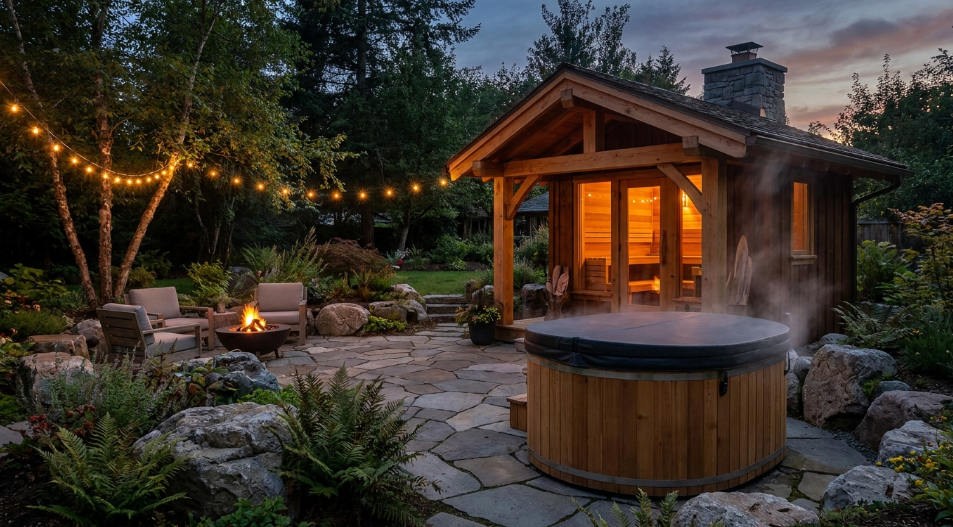
Unlike an indoor sauna a few steps down the hall, an outdoor cabin means walking through actual weather to get there, and that walk deserves its own small routine. A robe and sandals or slides work for most of the year, protecting bare feet from gravel, cold pavers, or dew-covered grass. In colder months, a lot of regular owners keep a separate, heavier robe by the back door specifically for the walk out, since standing around in a thin towel while the cabin heats is a fast way to talk yourself out of a session before it starts.
What Temperature Should You Actually Aim For?
Traditional outdoor cabins commonly run 170°F to 195°F once fully warmed, with the exact number depending on wood-fired versus electric heat and personal tolerance. First-time users do better starting closer to 150°F to 165°F for a shorter round, then building toward the higher end over several sessions as heat tolerance improves. A simple gauge: if you cannot comfortably hold a quiet conversation without gasping, the room is hotter than where you currently are in your adaptation, and turning it down is the right move, not pushing through.
How Should Cooldowns Work Outside?
This is where an outdoor setup has real advantages over an indoor one. Stepping outside into cool air, a garden hose, a cold plunge tub, or in winter climates a roll in snow are all long-standing ways to cool down between rounds, and the temperature contrast itself is part of why a lot of people prefer an outdoor cabin over an indoor one in the first place. Two to three rounds of 15 minutes hot followed by a 5 to 10 minute cooldown is a standard pattern. Whatever cooldown method you use, keep a towel or robe within reach right outside the door so you are not standing around exposed to the weather any longer than necessary.
What Etiquette Actually Matters With Neighbors Nearby?
Sound and sightlines carry differently outdoors than they do in an enclosed indoor room. Conversation that feels normal inside a cabin can carry over a shared fence line at night when the neighborhood is otherwise quiet, so keeping voices down after dark is a reasonable courtesy if your setup sits close to a property line. A simple privacy screen or fence panel near the entrance also solves most sightline concerns around the walk to and from the cabin, which matters more for an outdoor setup than it ever does for an indoor one.
What About Bugs, Weather, and Seasonal Use?
An outdoor cabin faces conditions an indoor one never does. In warmer months, a citronella candle or a simple screened entry vestibule cuts down on bugs drawn to the light and warmth near the door. In wet weather, a covered entry keeps the immediate approach dry even if the rest of the walk is not. None of this changes how the sauna itself works once you are inside and the door is closed, but planning for the ten seconds before and after the session is a genuinely different consideration than an indoor unit requires.
What Should You Keep Right Outside the Door?
A small bench, hook, or weatherproof box just outside the entrance makes the whole routine smoother, holding a robe, water bottles, and a spare towel without anyone tracking wet footprints back into the house between rounds. This matters more outdoors than it does with an indoor unit a few steps from a bathroom, since the alternative is leaving the cooldown area and going all the way back inside for something forgotten, breaking the rhythm of the session and letting the cabin cool down in the meantime. A simple covered hook by the door for robes, kept dry even in light rain, is a small addition that a lot of regular outdoor sauna owners say they wish they had installed on day one instead of adding later.
How Many Rounds and How Much Rest Between Them?
Two to three rounds is standard for a full outdoor session. A common pattern is 15 minutes of heat, a cooldown outside of 5 to 10 minutes with fresh air and water, then a second round, sometimes a third for experienced users. Hydration before and after matters as much as the heat itself, since a session can produce half a liter or more of sweat, and skipping water afterward is the most common reason people feel lightheaded post-session, not the heat.
What Does the Research Say About Frequency and Safety?
A widely referenced Mayo Clinic Proceedings review found regular sauna bathing associated with a range of cardiovascular and general health markers in long-term users, and a systematic review in Evidence-Based Complementary and Alternative Medicine reported similar associations across multiple studies. These are association findings from cohort and observational data, not controlled proof that sauna use by itself changes outcomes. If you are shopping for a cabin rather than continuing to rely on a public facility, it helps to compare wood species, wall construction, and heater options across a few builds before deciding on size, and SweatDecks lists current cabin dimensions and finishes for that kind of side-by-side comparison.
Frequently Asked Questions
What temperature should an outdoor sauna run at?
Most traditional cabins run 170°F to 195°F once fully heated. Beginners tend to do better starting around 160°F and building up over a few sessions.
Is it safe to cool off outside after a hot session?
For most healthy adults, brief cold exposure right after a sauna is a long-standing practice and not dangerous on its own. People with heart conditions should be more cautious.
What should you wear on the walk between the house and an outdoor cabin?
A robe or towel and sandals is standard, for modesty near neighbors and foot protection on gravel or pavers. Some owners keep a heavier robe for winter.
Is it rude to talk loudly in an outdoor sauna near neighbors?
Sound can carry further than expected, especially at night. Keeping voices down after dark is a reasonable courtesy near a shared fence line.
How often can you safely use an outdoor sauna?
Two to four sessions a week is common in the research on regular users. Anyone with a heart condition or who is pregnant should check with a doctor first.
References
- “Cardiovascular and Other Health Benefits of Sauna Bathing: A Review of the Evidence.” Mayo Clinic Proceedings, 2018. https://pubmed.ncbi.nlm.nih.gov/30077204/
- “Clinical Effects of Regular Dry Sauna Bathing: A Systematic Review.” Evidence-Based Complementary and Alternative Medicine, 2018. https://pubmed.ncbi.nlm.nih.gov/29849692/
- “Does the Combination of Finnish Sauna Bathing and Other Lifestyle Factors Confer Additional Health Benefits? A Review of the Evidence.” Mayo Clinic Proceedings, 2023. https://pubmed.ncbi.nlm.nih.gov/37270272/